 Get RS9 APK
The full fieldnote.
Open a chapter for the working, examples and exceptions.
The eleventh player is allowed to bat
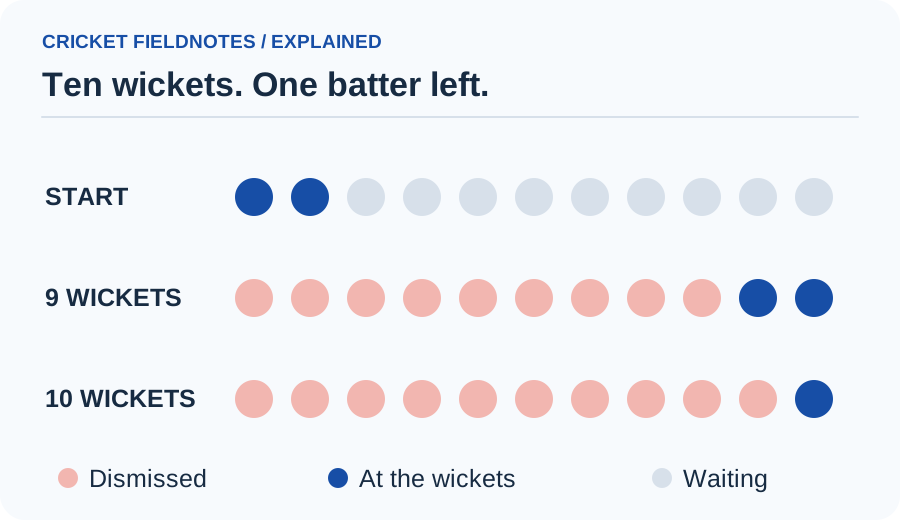
Batting proceeds with a pair: a striker and a non-striker. In an ordinary eleven-player side, two begin, and each dismissal brings in the next available batter. After nine wickets, the last two players form the final pair. The next dismissal leaves one without a partner, ending that ordinary innings.
The player listed at number eleven is therefore eligible to bat. They are not a permanently excluded team member, and the final survivor need not be number eleven. MCC Law 1 establishes the usual eleven-player team; Law 13 describes the circumstances in which an innings is complete.
Count pairs rather than unused names
| Ordinary innings stage | Dismissed | At the wickets | Yet to enter |
|---|---|---|---|
| Start | 0 | 2 | 9 |
| After the fifth dismissal | 5 | 2 | 4 |
| After the ninth dismissal | 9 | 2 | 0 |
| After the tenth dismissal | 10 | 1 survivor | 0 |
This table assumes everyone is available and no replacement or special event provision changes the situation. Notice that eleven names appear across the record without eleven dismissals. “All out” describes the team's exhausted batting opportunity; it does not require every individual to have an out beside their name.
Worked example: number eleven enters but faces nothing
Hypothetical worked example. At 102/9, the number-seven batter remains at the crease and number eleven enters. Number seven faces the next delivery, calls for a run, and number eleven is run out trying to reach the other end. Assume no completed run or additional scoring event.
The innings ends at 102. Number seven is the surviving not-out batter; number eleven was dismissed without facing a delivery. It would be wrong to conclude from zero balls faced that number eleven never participated in the innings. Entering, facing a delivery, scoring a run and being dismissed are four different events.
Now reverse which batter is run out. Number eleven could finish not out without having faced a ball. The headline total is unchanged, but the individual record differs. A compact scoreboard needs those distinctions to describe what happened.
Worked example: several players never need to enter
Hypothetical worked example. An uninterrupted twenty-over innings reaches its allocation at 152/5. Five batters have been dismissed and two finish not out, leaving four who did not bat. Those four were available; the innings simply ended before they were needed.
Read the batting card from top to bottom and place each player in one of those three groups. Five plus two plus four accounts for all eleven. If you turn every unused name into “not out”, you erase the difference between a player who had an innings and one who never entered.
The same habit helps when watching an opener remain throughout an innings. Batting-order position tells you when someone entered, not how many later teammates must necessarily have been dismissed before that player's own turn ends.
An innings can end for other reasons
Law 13 also covers an innings ending when a wicket or retirement leaves no further batter available, even with balls remaining. Declarations, forfeitures and agreed over or time limits are other completion routes. Do not insist on finding ten dismissal entries whenever an innings is finished.
Viewing exercise: take a completed batting card and count dismissed, not-out and did-not-bat entries. Check for a retirement or unavailable player before applying the simple table. Then explain why the innings ended in one sentence.
Scope: checked 5 September 2026; standard eleven-player cricket without special replacements. Smaller-sided matches and competitions with substitution provisions need their own conditions. This guide explains the usual count, not the historical origin of eleven-player teams.
Sources & scope
Worked examples and diagrams are illustrative, not live match records. Scene photographs are AI-generated illustrations. Rules are reviewed against the linked sources; the applicable competition’s playing conditions take priority.