 Get RS9 APK
The full fieldnote.
Open a chapter for the working, examples and exceptions.
Name the reference points first
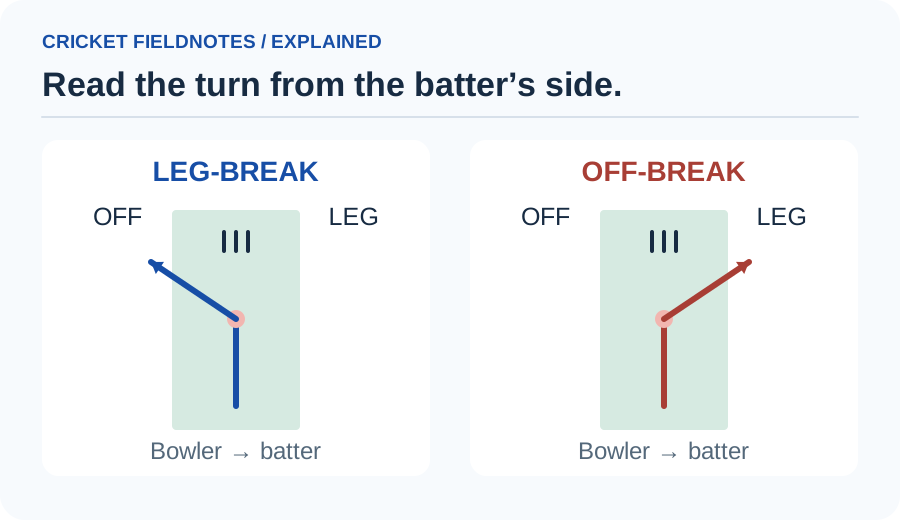
A leg-break and an off-break describe familiar stock spin deliveries. Against a right-handed batter, a right-arm leg-spinner's stock ball turns towards the off side after pitching. A right-arm off-spinner's stock ball turns towards the leg side. The useful comparison is the direction after the bounce, relative to that batter. A television camera's left and right are unreliable reference points.
Begin a replay by finding the batter's stance, then locate the stumps. The leg side is the side associated with the batter's legs; the off side is the opposite half. MCC's appendix supplies the field diagram. Switching the camera does not switch those sides.
Change the batter, keep the bowler
Imagine two invented batters, right-handed Riya and left-handed Leena, facing the same right-arm bowler. The bowler has not changed technique between deliveries. What changes is the ball's relationship to the batter.
| Bowler's stock delivery | Riya, right-handed | Leena, left-handed |
|---|---|---|
| Right-arm leg-break | Turns away from her leg side | Turns towards her leg side |
| Right-arm off-break | Turns towards her leg side | Turns away from her leg side |
The same bowler does not become an off-spinner merely because Leena takes strike. Keep the bowling style separate from a description such as turning into this particular batter.
Watch three moments in the replay
Pause at release, at the bounce and near the bat. First, note the bowler's arm and delivery angle. Next, mark where the ball pitches. Finally, compare its path after the bounce with its incoming path. This sequence helps separate a ball that arrives at an angle from one that noticeably changes direction on the surface.
For an invented notebook entry, write: right-arm bowler; right-handed batter; ball lands near middle stump; deviates towards off. That is a more useful observation than left turn. You can compare the note with another camera angle without reversing its meaning.
Watch ICC's account of Shane Warne's 1993 delivery to Mike Gatting for a historical example that distinguishes movement in the air from the turn after pitching. Its spectacular amount of turn is an example, not a minimum requirement for a leg-break.
A bowling label is not a promise
Right-arm off-spin is conventionally associated with finger spin and right-arm leg-spin with wrist spin. Both descriptions cover a repertoire. A leg-spinner can deliver a googly that turns the opposite way to the stock leg-break; other deliveries may go straighter. One ball therefore cannot always identify an entire bowling style.
Left-arm finger spin and left-arm wrist spin need their own labels. Do not copy the right-arm table and silently change the bowling hand. When a graphic provides the player's bowling style, record it alongside your observation rather than forcing every delivery into a two-name shortcut.
What turn alone cannot tell you
A large sideways deviation does not establish that a delivery was good, or that the next one will behave similarly. Length, pace, starting line and the batter's response still matter. A ball turning sharply while passing harmlessly wide presents a different question from a smaller deviation near the stumps.
For a beginner, accurate observation is enough. Leave a question mark when the camera hides the bounce. Slow motion can help you see a trajectory, but it cannot recover an angle the broadcast never showed.
Try the handedness reset
Practice: a right-arm leg-spinner bowls a stock leg-break to Riya. Leena then takes strike and receives the same stock delivery. Has the bowler changed style, and does the ball turn towards or away from Leena's leg side?
Show the answer
The bowling style is unchanged. The stock leg-break turns towards the left-handed Leena's leg side. Reset the batter's reference points before describing the delivery.
Sources & scope
Worked examples and diagrams are illustrative, not live match records. Scene photographs are AI-generated illustrations. Rules are reviewed against the linked sources; the applicable competition’s playing conditions take priority.