 Get RS9 APK
The full fieldnote.
Open a chapter for the working, examples and exceptions.
The check is about equipment dimensions
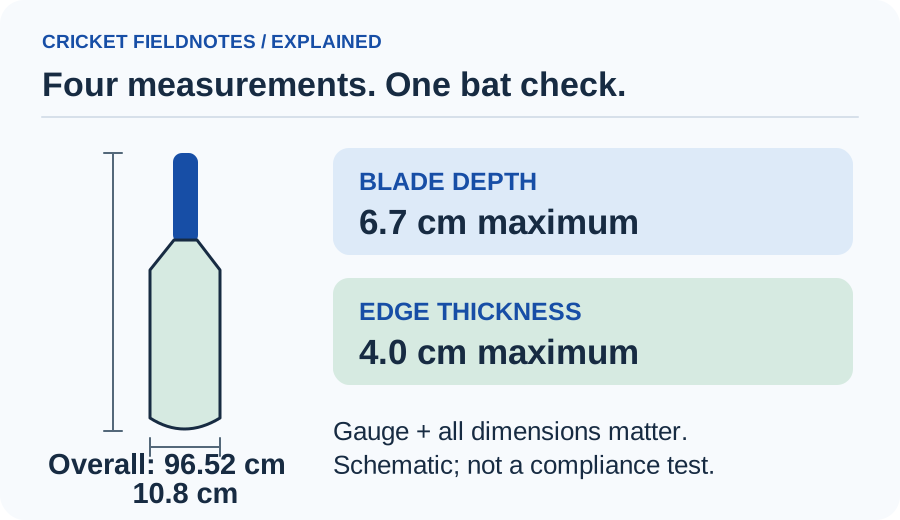
Cricket bats have size limits. MCC Law 5 sets maximum overall length and blade width, depth and edge thickness, and requires the bat to pass through the specified gauge. The gauge is a physical reference for permitted shape and size; it does not measure how far a player can hit a ball.
A broadcast showing an umpire inspecting a bat establishes that an inspection occurred. To describe a failed check, replacement requirement or disciplinary outcome in a real match, you need the official finding and that event's regulations. Do not invent those details from a short clip.
Read the limits as separate measurements
| Measurement | MCC published maximum | What it describes |
|---|---|---|
| Overall length | 38 inches / 96.52 cm | Complete assembled bat |
| Blade width | 4.25 inches / 10.8 cm | Width across the blade |
| Blade depth | 2.64 inches / 6.7 cm | Overall blade depth |
| Blade edge | 1.56 inches / 4.0 cm | Edge thickness |
Law 5 and Appendix B also address materials, protection, repairs, categories and the gauge. The table is an orientation aid, not the full specification. A product label stating one dimension cannot demonstrate compliance with every other requirement.
Worked example: passing three checks is insufficient
Hypothetical worked example. Imagine an accurately measured practice bat with a 95 cm overall length, 10.6 cm blade width, 6.6 cm blade depth and a 4.2 cm edge. The first three figures sit within the displayed maxima. The edge figure exceeds 4.0 cm, so the collection of measurements does not satisfy the listed size limits.
Now change the edge measurement to 3.9 cm. All four recorded numbers are within the table, but you still have not checked the gauge, material or other applicable specifications. The correct statement is “these four recorded dimensions are within the published limits”, not “everything about this bat is approved”.
This exercise uses deliberately clear invented measurements. Real checking requires the proper reference, correct measurement technique and the relevant match procedure. A viewer estimating millimetres from a camera angle has none of those guarantees.
Worked example: what can a ten-second clip establish?
Hypothetical worked example. A clip shows an official placing a gauge over a bat, speaking briefly to the batter, and the batter walking away carrying a different bat. The footage contains no audible ruling and ends before play resumes.
Your factual note can describe the visible inspection and equipment change. It cannot establish which measurement was at issue, whether the change was required, or whether any sanction followed. List those as unanswered questions. If an official statement later identifies the result, add it with its source rather than silently converting your earlier guess into a fact.
Also separate compliance from performance. Even a fully compliant bat does not tell you the quality of contact, the delivery's pace or the boundary distance of a particular shot. A discussion about large scores needs evidence from the cricket being played, not only a photograph of the equipment.
What to look for next time
When an equipment check appears, identify what is being checked, whether the actual result is shown, and where the event publishes its rules. Explain the purpose to a new viewer in one sentence without alleging an infringement you have not seen established.
Checked 5 September 2026: the figures above come from MCC's current Law 5. The announced next edition begins on 1 October 2026 and includes equipment changes. For a specific IPL or other competition incident, consult its effective playing conditions and official account; this general guide does not assert an event-specific inspection schedule.
Sources & scope
Worked examples and diagrams are illustrative, not live match records. Scene photographs are AI-generated illustrations. Rules are reviewed against the linked sources; the applicable competition’s playing conditions take priority.